2027 Kia Camper Motorhome: The Future of Electric Adventure Travel
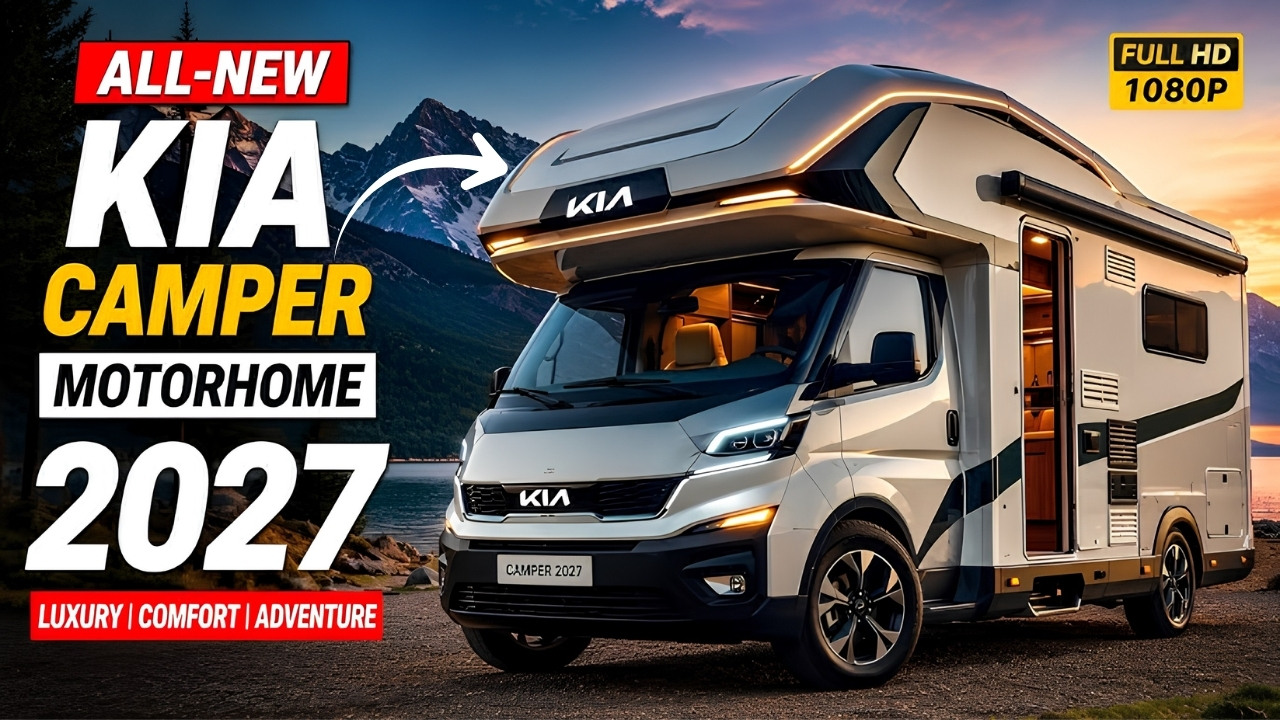
Kia is stepping boldly into the recreational vehicle space with its upcoming 2027 camper motorhome lineup, built on the brand’s new electric van platforms.
While official production details remain under wraps, industry reports and concept previews point to a family of electric camper vans—headlined by the PV5-based LightCamp and the larger PV7 derivative—designed to bring modern EV technology, smart living features, and genuine road-trip practicality to North American buyers.
A New Chapter for Kia: From City Vans to Road-Trip Homes
Kia’s journey into camper territory isn’t a sudden pivot; it’s the natural evolution of its Purpose Built Vehicle (PBV) strategy. The Kia PV5, already crowned International Van of the Year and Best Electric Van for 2027, forms the backbone of this effort.
Built as a compact electric van, the PV5 offers a versatile platform that third-party converters and Kia’s own lifestyle partners are adapting into campers.
The result is a new class of electric motorhome that prioritizes efficiency, everyday drivability, and tech-forward convenience over the bulk and fuel costs of traditional RVs.
For the U.S. market, this means a camper that can double as a daily driver, fit in standard parking spaces, and still deliver a comfortable sleeping, cooking, and lounging experience on weekends away.
Design Philosophy: Modern, Modular, and Made for Adventure
The 2027 Kia camper motorhome concepts showcase a clean, aerodynamic silhouette with Kia’s signature lighting, tall rooflines for interior headroom, and rugged lower cladding for light off-pavement use.
Large side doors and rear access make loading gear simple, while expansive windows create an airy cabin feel—critical in a compact footprint.
Inside, the focus is on modularity. Expect rotating or folding front seats that integrate with the living area, a compact kitchenette with pull-out counters and induction cooking, clever storage nooks, and a sleeping zone that can convert back to daytime seating.
Some concepts even feature panoramic skylights with roof access, integrated roof racks, and slide-out bed platforms to maximize space efficiency.
Electric Powertrain and Real-World Range Expectations
Under the skin, the 2027 Kia camper is expected to ride on the same electric architecture as the PV5 and the upcoming larger PV7 van.
The PV5 Cargo for North America is slated to arrive with a 71.2 kWh battery, a 120 kW (about 160 hp) front motor, and an estimated 225 miles of range under favorable conditions. DC fast charging from 10% to 80% in roughly 30 minutes keeps downtime low on long trips.
For a camper conversion, added weight from furniture, water, and gear will reduce real-world range. Industry estimates suggest a practical camping range of 250–350 miles under ideal testing, with real-world figures likely lower depending on load, terrain, and climate use.
Acceleration is projected in the 8–10 second window for 0–60 mph, with top speed electronically limited around 100 mph—more than adequate for highway cruising and mountain passes.
The larger PV7, spotted testing with minimal camouflage, is significantly bigger than the PV5 in every dimension and is expected to debut in 2027 as a spacious sibling.
While Kia hasn’t published battery or range figures for the PV7 yet, its size makes it a strong candidate for a more luxurious, long-range camper variant with expanded living space.
Smart Camping Tech: V2L, OTA Updates, and Connected Living
One of the standout features of the 2027 Kia camper ecosystem is Vehicle-to-Load (V2L) capability, allowing the big propulsion battery to power camp equipment, lights, small appliances, and even charge e-bikes or drones directly from the van.
This turns the camper into a mobile power hub, reducing the need for separate generators or shore power hookups.
Over-the-air (OTA) software updates mean the camper’s infotainment, climate logic, and driver-assist features can improve over time without a dealership visit.
Expect Hyundai Motor Group’s Pleos infotainment and fleet software to underpin the system, offering intuitive navigation with charging-aware route planning, remote climate pre-conditioning, and integrated camping profiles that adjust energy use based on your setup.
Safety and Driver Assistance: Confidence on Every Mile
Kia’s modern safety suite is expected to carry over into the camper variants, including forward collision avoidance assist, automatic emergency braking, lane keeping assist, blind-spot monitoring, rear cross-traffic alert, adaptive cruise control, driver attention monitoring, parking sensors, and a 360-degree surround-view camera.
These systems are especially valuable in a taller, wider vehicle that may be new to many buyers transitioning from sedans or crossovers.
Interior Comfort: Sleeping, Cooking, and Living in Compact Luxury
The interior layout prioritizes flexibility. Front seats swivel to face a central table, creating a four-person lounge. A compact kitchen module typically includes a sink, small fridge, and induction cooktop, with storage for cookware and dry goods tucked into benches and overhead cabinets.
Sleeping arrangements vary by concept, from fixed rear beds to convertible dinettes and even rooftop tents for stargazing.
Premium touches—soft-touch surfaces, ambient lighting, large panoramic roofs, and thoughtful ventilation—aim to make the camper feel more like a boutique hotel room than a utilitarian van.
For families or couples who want to work remotely, integrated power outlets and strong connectivity options support laptops and devices without draining auxiliary batteries.
Off-Grid Readiness and All-Weather Capability
While not a hardcore overlander by default, the 2027 Kia camper concepts emphasize all-weather usability. A standard heat pump improves efficiency in cold climates, and the low center of gravity from floor-mounted batteries enhances stability on winding roads.
Roof-mounted solar panels appear on several concepts, trickling charge back into the system to extend off-grid stays.
For light off-pavement exploration, rugged cladding, all-season tires, and available all-wheel-drive configurations (on certain derivatives) provide confidence on forest service roads and snowy mountain passes.
Market Positioning and Availability Outlook for the USA
Kia has not officially confirmed a U.S. launch date or final specifications for a dedicated “Kia Camper Motorhome” badge.
However, the PV5-based camper conversions and the PV7’s expected 2027 debut create a realistic window for North American availability in late 2026 through 2027, depending on converter partnerships and regulatory approvals.
Pricing for a well-equipped electric camper based on the PV5 platform could start in the mid-$50,000s and climb toward $70,000+ with larger batteries, premium interiors, and added camping hardware.
Larger, luxury-focused derivatives could command higher figures, but Kia’s value-oriented branding aims to keep the total cost competitive against traditional gas-powered camper vans.
Why This Matters for American Road Trippers
The 2027 Kia camper motorhome represents a shift toward efficient, tech-rich, and everyday-usable RVs. It’s designed for buyers who want to escape the city without sacrificing modern convenience or paying steep fuel bills.
With V2L power, fast charging, smart software, and a compact footprint, it’s a compelling option for weekend warriors, remote workers, and small families looking to explore national parks, coastal highways, and mountain towns without the hassle of a massive rig.
10 FAQs: 2027 Kia Camper Motorhome (USA Focus)
1. Is the 2027 Kia Camper Motorhome officially confirmed for the U.S.?
Kia has not officially announced a U.S.-badged “Kia Camper Motorhome,” but PV5-based camper conversions and the PV7 electric van platform are expected to enable camper variants in the 2027 model year window.
2. What platform will the Kia camper use?
The camper is expected to be based on Kia’s PV5 electric van platform, with potential for a larger PV7-based variant offering more interior space.
3. How much range can I expect in real-world camping use?
While the PV5 Cargo targets around 225 miles of range, a camper conversion’s added weight and equipment may reduce real-world range; estimates suggest 250–350 miles under favorable conditions, with lower figures under heavy load or extreme weather.
4. Can I charge the Kia camper at Tesla Superchargers?
Yes. The North American-spec PV5 includes a North American Charging Standard (NACS) connector, providing access to Tesla Superchargers and thousands of other charging stations.
5. Does it support off-grid power for camping gear?
Yes. Vehicle-to-Load (V2L) functionality allows the camper’s battery to power appliances, lights, and devices directly, reducing reliance on generators or shore power.
6. What safety features are expected?
Anticipated features include forward collision avoidance, automatic emergency braking, lane keeping assist, blind-spot monitoring, rear cross-traffic alert, adaptive cruise control, driver attention monitoring, parking sensors, and a 360-degree camera.
7. Will it have all-wheel drive?
Certain derivatives and concepts suggest available all-wheel-drive configurations, though final U.S. specs depend on the specific model and converter package.
8. How fast can it charge on DC fast chargers?
The PV5 platform can replenish from 10% to 80% in about 30 minutes on DC fast charging, keeping road-trip downtime manageable.
9. What’s the expected starting price in the U.S.?
Projections suggest a starting price around $50,000–$65,000 for a well-equipped base camper, with fully loaded versions potentially reaching $70,000 or more depending on battery size and interior equipment.
10. When could it arrive in the U.S.?
If Kia proceeds with dedicated camper derivatives or converter partnerships, a realistic launch window is late 2026 through 2027, aligned with the PV5 rollout and PV7 debut.